
Reducing on-site visits : the tangible benefits of remote assistance
Fewer trips = lower costs, less fatigue, lower CO₂ emissions, higher productivity — the benefits of remote assistance.
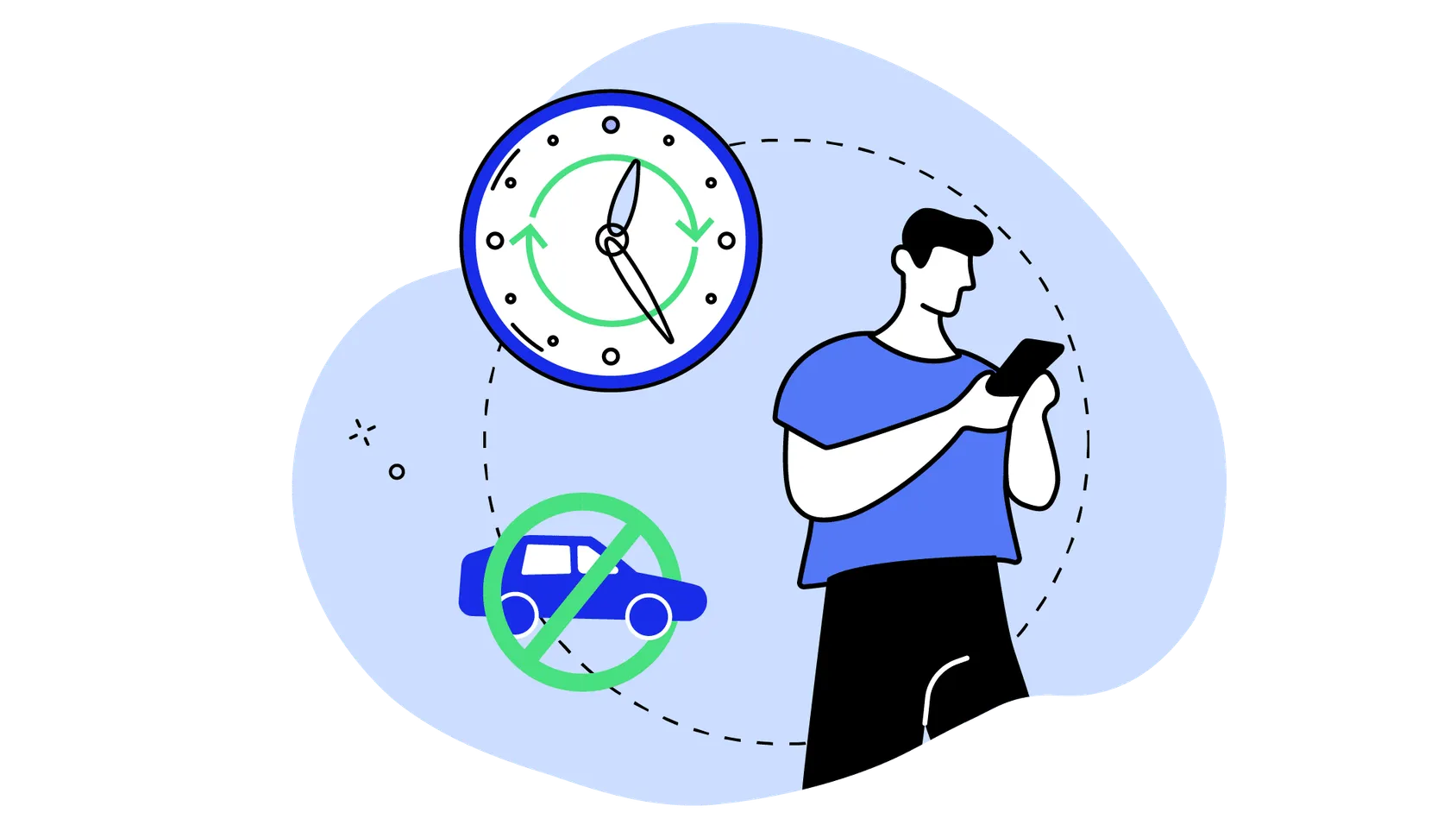
How can remote assistance reduce often underestimated systemic impacts?
A technician leaves Clermont-Ferrand heading for Agen. Two hours on the road, a break, a rushed customer visit: the issue turns out to be a poorly engaged circuit breaker. Driving back in the rain. Four hours of travel, 10 minutes of intervention, half a day mobilized, €90 in fuel costs, and nearly 12 kg of CO₂ emitted. The customer is relieved. The technician is exhausted. The company operates at a loss on this mission.
This scenario, so common across hundreds of technical service organizations, reflects a paradox : the value lies in the resolution, but the cost lies in the travel. At a time when companies are striving for leaner, more sustainable operating models — and when skilled technicians are increasingly scarce — continuing to deploy human resources for avoidable cases is no longer viable.
So how can unnecessary travel be identified and reduced intelligently? How can the gains be measured? And how can this be done without degrading service quality?
One clue: introducing remote assistance.
Key takeaways
- Each avoided on-site visit saves CO₂, time, and technician fatigue.
- 30% to 70% of interventions can be avoided through video-assisted remote support.
- The carbon footprint of after-sales support is both a logistics optimization lever and a strong CSR signal.
1. Technical on-site visits: high cost, low return
On-site visits have historically been embedded in after-sales support models. Yet they represent one of the most costly components:
In time: an average of 2 to 3 hours per technician per day
In cost: approximately €150 per intervention (fuel, labor time, vehicle depreciation, lost productivity)
In carbon footprint: 130 g of CO₂ per km on average, or roughly 12 kg of CO₂ per visit
Why it is so costly:
-
Travel time is non-productive.
-
Technicians cannot handle other interventions during that time.
-
Each trip mobilizes a vehicle, fuel, and logistics resources.
-
It increases fatigue, reduces diagnostic quality, and generates stress.
According to ADEME, a mobile technician emits an average of 2.5 tons of CO₂ per year from travel alone.
80% of short technical trips could be avoided if a visual diagnostic were performed upfront.
2. Hidden impacts: CO₂, fatigue, and overstaffing
Carbon cost
Based on a team of 15 technicians making 4 trips per day each, this represents more than 40 tons of CO₂ per year — equivalent to 25 round-trip flights between Paris and New York.
Logistics workload
-
Company vehicles tied up
-
A fleet to maintain, renew, and insure
-
Scheduling constrained by travel times
Human impact
-
Mental and physical fatigue caused by travel
-
Additional stress
-
Ongoing road risk (according to INRS, 1 in 3 work-related accidents is a commuting accident)
Indirect HR costs
-
Difficulty recruiting field technicians
-
Higher turnover in mobile roles
-
Management tension around scheduling and assignments
A less travel-intensive after-sales service is more sustainable, more attractive, and more profitable.
3. Why traditional tools are no longer sufficient
Indirect HR costs
Vague tickets
Many interventions are triggered by a simple call to the front desk or an email, without sufficient qualification: the customer calls, the service dispatches someone. Wrong equipment, wrong skills, no evidence, no documentation.
Teams with no alternative
Without a reliable video assistance tool and without the ability to capture evidence remotely, on-site visits remain the only “safe” option. But they come at a high cost.
Deeply rooted habits
“We always go on site”: this mindset is still widespread. Customers expect to “see someone,” and technicians themselves often find a certain decision-making comfort in traveling. Practices need to evolve.
Tools not designed for traceability
Even when WhatsApp exchanges or calls resolve an issue remotely, nothing is formalized. No report. No proof of service. No knowledge capitalization.
4. The solution: structuring a hybrid after-sales service combining remote assistance and targeted on-site presence
The right tool: a remote assistance platform aligned with field operations
-
WhatsApp integration to initiate mobile conversations instantly
-
Video-assisted support to visually identify issues and enable reliable diagnostics
-
Automatic report generation based on voice, visual, and written exchanges
-
Access to historical similar cases
-
Knowledge base enrichment to support continuous learning and capitalization
“With FIXEE, we diagnose issues remotely, intervene on site only when necessary, and every interaction enriches the technical knowledge base.”
Example 1 – Agricultural cooperative (Nouvelle-Aquitaine)
Previously, 100% of breakdowns triggered an on-site visit. After implementing remote assistance with video support:
-
42% of trips avoided
-
18 tons of CO₂ not emitted
-
€23,500 saved over 12 months (fuel, labor hours, logistics)
Example 2 – Industrial machinery manufacturer (Rhône-Alpes)
With the integration of a video-assisted after-sales support tool combined with WhatsApp:
-
58% reduction in technical expert travel
-
Removal of 4 after-sales service vehicles
-
First-contact resolution rate increased by 22%
Example 3 – Export customer service (North Africa / Europe)
Transition from a 100% on-site model to a hybrid approach combining video support and targeted on-site visits:
-
64% of interventions avoided
-
50% reduction in CO₂ emissions across international after-sales operations
-
18% decrease in export after-sales service costs
5. What this approach changes structurally
1. Technical efficiency gains
-
Technicians spend less time on the road
-
They can handle more cases per day
-
They focus on high-value interventions
2. Improved service quality
-
Shorter response times
-
Better traceability
-
Reduced customer dissatisfaction
3. Talent and workforce value enhancement
-
Reduced fatigue
-
Improved planning
-
More attractive roles (chosen mobility, not imposed)
4. Measurable CSR impact
-
CO₂ data that can be integrated into CSRD / ESG reporting
-
Contribution to internal climate objectives
-
Measurable reduction in resource consumption
6. What does a low-travel after-sales service look like?
Data-driven
-
Number of kilometers avoided
-
Video-to-on-site intervention ratio
-
CO₂ avoided per technician per year
Equipped with an ergonomic field tool
-
Smartphone-compatible
-
WhatsApp and video integration
-
Automatic report generation
-
Multilingual translation when needed
Committed to continuous improvement
-
Remote cases enrich the knowledge base
-
Technicians become active contributors to CSR performance management
-
Customers are involved in the process (co-diagnosis)
Conclusion: implementing remote assistance reduces the negative impacts of travel while improving customer service.
Reducing unnecessary travel is a largely untapped source of efficiency. It does not come at the expense of service quality or responsiveness — quite the opposite.
Remote assistance tools such as FIXEE allow expertise to be applied where it truly matters: in diagnosis, in listening, and in resolution — rather than in traffic jams. By measuring what can be avoided and valuing what can be resolved remotely, companies transform their after-sales service model into one that is more sustainable, more cost-effective, and more human.
Every avoided intervention is proof of progress. What remains is to capture it, analyze it… and replicate it.
About the author
FIXEE